



EU-Mercosur: What the world’s largest free trade zone means for F&B supply chains
Key takeaways
- EU member states have approved the EU-Mercosur agreement, creating a free trade zone of 700 million consumers with an estimated €4 billion (US$4.2 billion) in annual tariff savings for European exporters.
- The wine, spirits, dairy, and confectionery sectors stand to gain from tariff elimination and GI protection, while beef and poultry farmers warn of market “decimation” from cheaper South American imports.
- The deal still faces a tight vote in the European Parliament, with MEPs set to decide on a legal challenge next week that could suspend the entire ratification process.
After a quarter-century of negotiations, the EU-Mercosur trade agreement has cleared its most significant hurdle — but the F&B industry remains deeply divided over what it means for European supply chains.
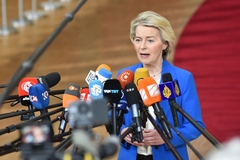
EU member states have voted to approve the deal with the South American bloc comprising Argentina, Brazil, Paraguay, and Uruguay, creating what European Commission President Ursula von der Leyen describes as “the largest free trade zone in the world” — a market of 700 million consumers representing approximately 20% of global GDP.
“At a time when trade and dependencies are being weaponized, and the dangerous, transactional nature of the reality we live in becomes increasingly stark, this historic trade deal is further proof that Europe charts its own course and stands as a reliable partner,” von der Leyen stated following the council vote on January 9.
The agreement eliminates tariffs on approximately 91% of EU goods exported to Mercosur and 92% of Mercosur exports to the EU, representing estimated annual savings of €4 billion (US$4.7 billion) for European businesses, according to European Commission figures.
First proposed in 1999, the deal reached an agreement in principle in 2019 before being stalled by fierce opposition from farmers and environmental groups. The commission finalized negotiations in December 2024, with last-minute safeguards and a €45 billion (US$52.7 billion) agricultural support package securing Italy’s crucial vote. France, Ireland, Poland, Austria, and Hungary voted against, while Belgium abstained.
When leaders convened in Uruguay to finalize the deal, protests erupted across Europe, with farmer unions blocking ports and motorways.
The strategic pivot
The agreement’s passage reflects Europe’s urgent need to diversify trade relationships amid escalating US tariffs and concerns over Chinese dominance in critical supply chains. Beyond market access, the deal secures European access to critical raw materials essential for food production — from soy for animal feed to minerals for processing.
European wine and spirits producers have faced mounting pressure from transatlantic trade tensions, with US tariffs now hitting the bloc’s alcohol export industry, which exported €2.9 billion (US$3.37 billion) worth of alcohol to the US in 2024. The Mercosur agreement offers a strategic alternative.
Winners: Export-oriented processors
For value-added F&B sectors, the deal unlocks substantial market access. Tariffs currently reaching 35% on spirits, 27% on wines, 28% on dairy products, and 20% on chocolate will be eliminated or substantially reduced, according to European Commission trade data.
Wine, spirits, and dairy exporters stand to gain from tariff elimination and protection of 344 European Geographical Indications in Mercosur markets.Pauline Bastidon, director of trade and economic affairs at spiritsEurope, previously told Food Ingredients First: “With a population of 280 million and a combined GDP of nearly US$3 trillion, the Mercosur region offers significant untapped potential for EU spirits exporters.”
Ignacio Sánchez Recarte, secretary general of the European Committee of Wine Companies, says: “We see a structural decline in wine consumption in traditional markets, and EU wine producers are more and more dependent on exports.” With tariffs removed, “we could expect double-digit export growth in the next few years.”
The agreement also protects 344 European Geographical Indications from imitation in Mercosur markets. As ten European F&B industry groups stated in December, Mercosur countries serve as “strategic suppliers of critical raw materials essential to Europe’s food and drink industries.”
Losers: Primary producers warn of “decimation”
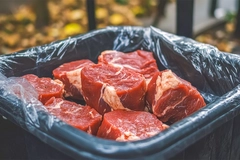
The picture looks starkly different for European livestock farmers. The agreement establishes a phased quota of 99,000 metric tons of beef at reduced tariffs and 180,000 metric tons of duty-free poultry.
Irish Farmers Association (IFA) president Francie Gorman previously stated: “This deal is the height of hypocrisy. There will be no level playing field for EU farmers. Our markets will be undermined by cheap imports produced to lower standards.”
The IFA warns that even at 1.5% of total EU production, the concentrated impact on premium cuts and price-sensitive segments could be disproportionate, with Brazil exporting beef at prices 20–30% lower than European production.
Raw material competition
Beyond exports, the deal addresses Europe’s dependence on South American agricultural commodities. The EU imported approximately €7.1 billion (US$7.5 billion) in animal feed products from Mercosur in 2024, with coffee, tea, cocoa, and spices adding €5.2 billion (US$5.5 billion), according to commission statistics.
For processors, securing these supply chains strengthens competitiveness. But this also creates tension: the same imports that benefit processors threaten primary producers supplying domestic ingredients.
Environmental and animal welfare concerns
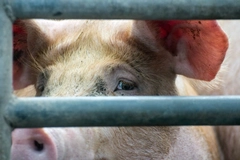
Animal welfare campaigners warn that the agreement could undermine Europe’s progress on livestock standards, potentially allowing new channels for animal products produced below European standards to enter the bloc.
Impacts on the wider global environment also remain a concern.
The Veblen Institute estimates the deal could increase Amazon deforestation by 25%. Greenpeace warns it could generate 340 million tons of additional CO2 over the next decade.
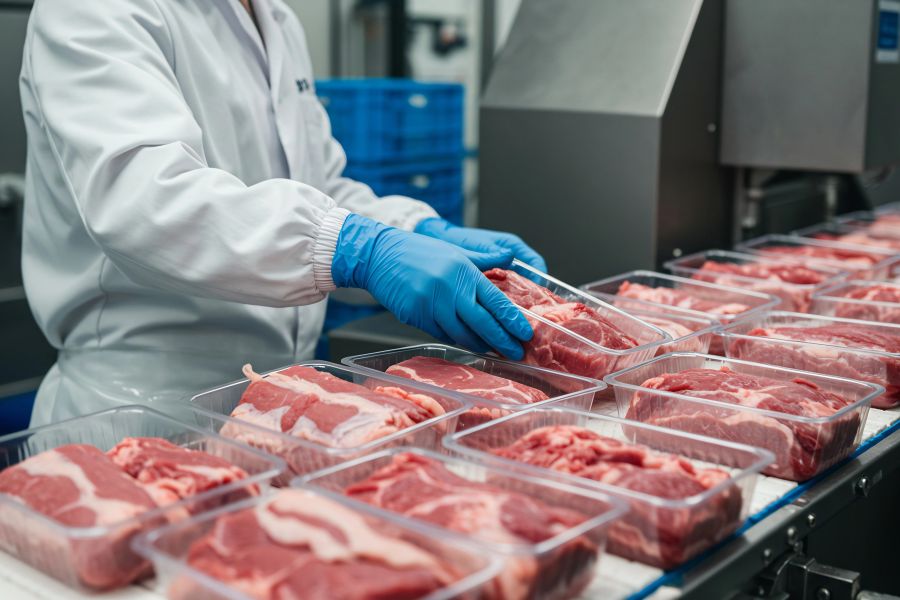 European livestock farmers warn the deal could “decimate” markets with cheaper South American imports produced under lower welfare standards.Research by Dutch platform Profundo estimated meat industry giant JBS could earn €1.7 billion (US$1.8 billion) in additional profits by 2040, potentially boosting emissions and deforestation through increased meat production.
A provision allowing Mercosur nations to challenge the EU Deforestation Regulation has particularly alarmed environmental groups, intersecting with ongoing EUDR implementation challenges.
Safeguarding mechanisms
To secure passage, the commission introduced strengthened safeguards allowing temporary suspension of tariff preferences if imports threaten EU producers.
Investigations can be triggered when prices of sensitive products are 5% cheaper than EU equivalents combined with import volumes rising 5% over three years. Investigations can conclude in four months, or 21 days in urgent cases.
The commission committed €6.3 billion (US$7.4 billion) in crisis funds for agriculture, with early access to up to €45 billion (US$47.3 billion) from the next CAP budget period (2028–2034), securing Italy’s crucial vote.
The parliament gamble
Despite council approval, the agreement cannot be implemented without European Parliament consent.
MEPs will vote next Wednesday (January 21) on a resolution calling on the EU’s top court to assess the deal’s legality, according to Euronews. The draft resolution challenges a “rebalancing mechanism” allowing Mercosur countries to take compensatory measures if future EU laws reduce their exports.
Should the European Parliament adopt the resolution, a judicial review would suspend the entire ratification process. If the court rules parts are illegal, negotiations would restart — potentially unwinding 25 years of work.
“It is useful to ask the court to ensure that all provisions comply with EU treaties and do not undermine the EU’s independence or legislative sovereignty,” Valérie Hayer, who leads the liberal Renew group, told Euronews.
MEPs remain deeply divided. In October, 269 lawmakers rejected a paragraph welcoming the agreement while 259 voted in favour. One EU diplomat told Euronews that 15 to 20 MEPs could swing the outcome.
German Chancellor Friedrich Merz has called the agreement “a milestone in European trade policy.” But French Agriculture Minister Annie Genevard has pledged to fight for rejection.
For Europe’s F&B industry, the coming months will determine whether the world’s largest free trade zone becomes reality — or whether 25 years of negotiations collapse at the final hurdle.