

Food Ingredients First reviews 2025: F&B innovation amid regulatory and supply chain pressures
Key takeaways
- The F&B industry focused on innovation, with advancements in alternative proteins, AI-driven production, and clean label reformulation.
- Companies faced regulatory changes, such as bans on synthetic additives and trade tariffs, alongside volatile supply chains due to climate change and geopolitical tensions.
- Rising demand for plant-based foods, health-conscious products, and transparency in ingredient sourcing reshaped consumer preferences.
It was a year that tested the F&B industry’s resilience while accelerating its transformation. From geopolitical trade shocks and regulatory upheaval to climate-driven supply volatility and shifting consumer health priorities, the operating environment became more complex. Across every region, businesses were forced to make faster, more strategic decisions on sourcing, formulation, technology, and transparency, redefining what competitiveness looks like in a disrupted global food system.
Food Ingredients First brings together the defining stories that shaped the year. Innovation surged in response to pressure: alternative proteins advanced toward price parity, fermentation and AI moved from pilots to production tools, and clean label reformulation accelerated amid bans on synthetic additives. At the same time, sustainability claims faced sharper scrutiny, animal welfare entered regulatory frameworks, and food security climbed political agendas.

This review charts how ingredient suppliers, manufacturers, policymakers, and technology providers navigated uncertainty to unlock new growth pathways, manage risk, and prepare for a future where nutrition, sustainability, and profitability are no longer competing priorities, but interdependent ones.
January
Cargill: Crossing the next plant-based frontier with mycoprotein, global flavors and cost-efficiency
Sandy De Houwer, global marketing director for Meat & Dairy Alternative Solutions at Cargill, spoke to Food Ingredients First about advances in plant-based innovation, specifically the rise of cell culture and fermentation. She explained that consumers are becoming increasingly curious about the connection between nutrition and sustainability, and why experts predicted that this curiosity would continue in 2025 with the rise of plant-forward eating trends.
US regulators ban red dye No. 3 following three decades of debate and cancer concerns
The US FDA banned the use of red dye No. 3 — a controversial additive that gives food and drink products a bright, cherry-red color. The synthetic color will no longer be allowed in food or ingested drugs from January 15, 2027, giving manufacturers time to reformulate products.
Kopi luwak controversy: PETA uncovers animal cruelty in coffee trade
An undercover PETA investigation claimed to have exposed the “extreme suffering” of Asian luwaks on Indonesian kopi luwak (or civet coffee) farms. Although some businesses have stopped selling the so-called delicacy amid growing animal welfare concerns, big-name brands like British luxury department store Harrods continued to offer kopi luwak products.
UK plans to turbocharge AI: How could national development bolster British food security?
UK Prime Minister Keir Starmer announced a plan to “mainline AI into the veins of the nation,” backed by an initial £14 billion (US$17.3 billion) in private investments. The plans were expected to boost efficiency, accountability, and sustainability across national industries, including F&B. We spoke to stakeholders deploying AI in the agriculture, foodservice, and hospitality sectors.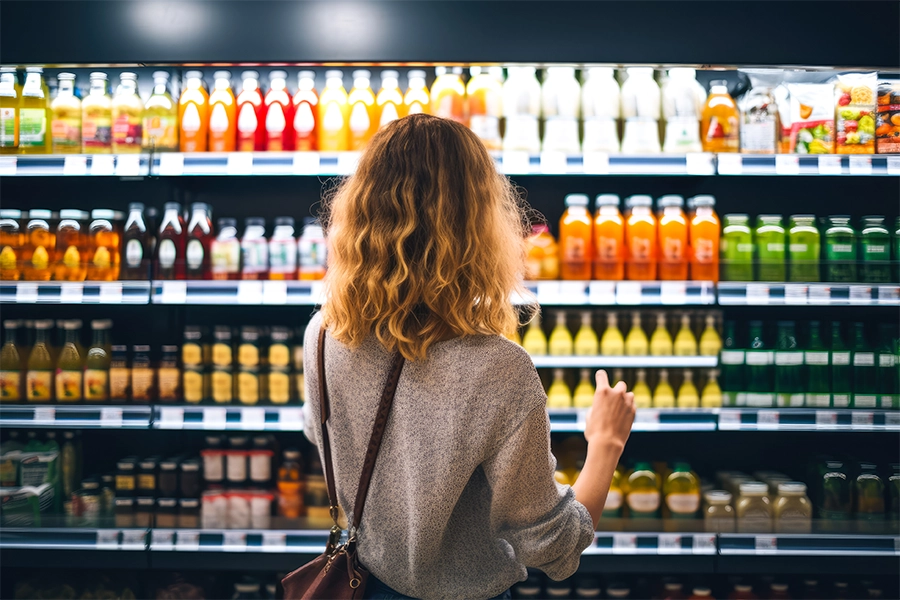 F&B firms adapted to regulatory challenges, volatile supply chains, and shifting consumer demands for health-conscious products.
February
F&B industry braces for Trump’s trade tariffs: Rising costs, supply shocks, and menu changes
The F&B industry reacted strongly to US President Donald Trump’s announcement that Canada, Mexico, and China would be subject to import tariffs. Vegetables, alcoholic drinks, and other agricultural products were expected to take a big hit amid fears of price hikes for businesses and consumers. We spoke to experts to see how Trump’s plans could impact the industry.
We attended ISM and ProSweets 2025 in Cologne, Germany, where we explored the latest efforts to bring progress to the cocoa market. Top companies presented a bevy of solutions targeting sustainability, cost reduction, production efficiency, and enduring consumer demand for indulgent cocoa and chocolate solutions. We also discussed nutritional concerns and other confectionery trends.
dsm-firmenich announces €1.5B divestment of Feed Enzymes Alliance stake to Novonesis
dsm-firmenich agreed to sell its stake in the Feed Enzymes Alliance — a livestock nutrition and health business — to Novonesis, its equal partner in the enterprise, for €1.5 billion (US$1.55 billion). Share prices in both companies spiked following the announcement.
Tunnel vision? Industry reacts to EU’s new agriculture and food commitments
The European Commission released its Vision for Agriculture and Food — a new roadmap for the future of farming and F&B production in Europe that seeks to allay fears over producer livelihoods, quality control, and environmental intensity. The report is based on the findings of an advisory group led by industry leaders, but faced criticism for a lack of concrete commitments and vague wording.
March
The European Commission responded to US President Donald Trump’s trade tariffs on EU aluminum and steel imports by announcing €26 billion (US$28.3 billion) worth of retaliatory measures that included US agricultural products like poultry, beef, and certain seafood. US imports of nuts, eggs, dairy, sugar, and vegetables to the EU would also receive trade levies.
Over 70,000 people attended Natural Products Expo West (NPEW) in Anaheim, California, US, where over 3,300 F&B industry companies exhibited their latest products and R&D. We spoke with numerous experts and industry representatives at the show and heard concerns over public dietary health in the US, as well as proposals to limit processed foods and alter industrial agricultural practices.
US Secretary of Health and Human Services Robert F. Kennedy Jr. began ramping up pressure on food companies to ban certain color additives amid growing health concerns. Kennedy had been urging industry stakeholders to take a proactive approach to some artificial food additives before government intervention. The discussions came as several US states moved to ban common food dyes, citing health risks.
Campaigners urge EU lawmakers to block industrial octopus farming after permits approved
Animal welfare campaigners in Europe called on EU lawmakers to prevent food corporations from establishing octopus farms throughout the continent following the acquisition of a hatchery permit by multinational fishing group Grupo Profand. Keri Tietge, aquatic animals project officer at Eurogroup for Animals, told us that whatever the company’s true intentions are, the research findings could be used to advance captive octopus breeding.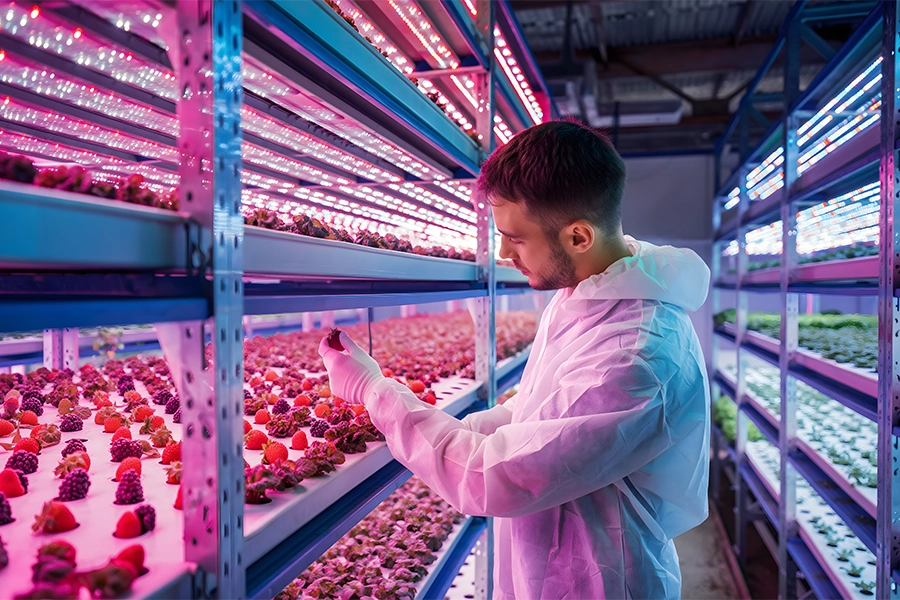 Innovators accelerated the development of alternative proteins, AI-driven production, and clean label reformulations.
April
Tackling food fraud: Breaking down supply chain vulnerabilities with digital prevention strategies
Food fraud is a growing and often invisible threat, undermining food safety, public trust, and economic stability. We spoke with one of the world’s most prominent food fraud prevention experts, Dr. John W. Spink, director of the Food Fraud Prevention Academy and assistant professor at Michigan State University, about how the industry can guard against crime.
The F&B industry plays a vital role in Chinese society, creating shifting consumer preferences and fostering innovative culinary creations. This year, food trends in China were influenced by cultural heritage, evolving lifestyles, and technological advancements. Innova Market Insights highlighted the top trends in China.
FDA cracks down on eight synthetic food dyes amid growing health concerns
The FDA revealed it would ban the use of Citrus Red No. 2 and Orange B in F&B products as part of its broader initiative to phase out all petroleum-based synthetic dyes from the US food supply. As part of this strategy, the agency also planned to authorize four new natural color additives and speed up the review and approval of others to help companies find substitutes faster.
Nestlé and ofi launch global agroforestry partnership to curb cocoa-linked deforestation
Nestlé and ofi joined forces in the “largest-ever” cocoa agroforestry partnership to lower carbon emissions and fight deforestation. The announcement came as the cocoa industry grapples with enduring social, ethical, and economic challenges of increasing demand amid supply chain disruptions, inflation, and environmental fallout.
May
Navigating the natural color transition: IFT expert details reformulation and cost insights
The US legislative drive to phase out synthetic dyes compelled manufacturers to overcome complex reformulation hurdles. Formulators must address variables such as water activity, pH, and sensitivity to light and heat to develop natural color solutions that align with consumer expectations for visual impact and environmental responsibility. Renee Leber, an IFT food scientist, told us what natural food color formulators could expect.
Iba 2025 review: Fighting food waste, preserving taste and going plant-based in baking
Iba 2025 took place in Düsseldorf, Germany, after a two-year hiatus. We met with baking industry leaders who highlighted numerous trends and drivers in the segment, including the latest in taste formulations, food waste issues, naturality, plant-based confectionery, and labor shortages.
Backlash after European Commission unveils “farcical” EUDR risk category classification scheme
The European Commission revealed a new category system for its Deforestation Regulation (EUDR). Countries would fall under “low,” “standard,” and “high risk,” while EU member states were classified as “low-risk.” Some accused the EU of showing preferential treatment and branded the new benchmarking “a farce.”
Plant-based and alternative proteins took center stage at IFFA in Frankfurt, Germany, where global food suppliers and producers showcased their latest innovations. As the global food system reels from climate change, inflation, and geopolitical uncertainty, exhibitors demonstrated a broad industry effort to achieve plant-based price parity and scale in alternative meat technologies to feed a growing, increasingly health-conscious population.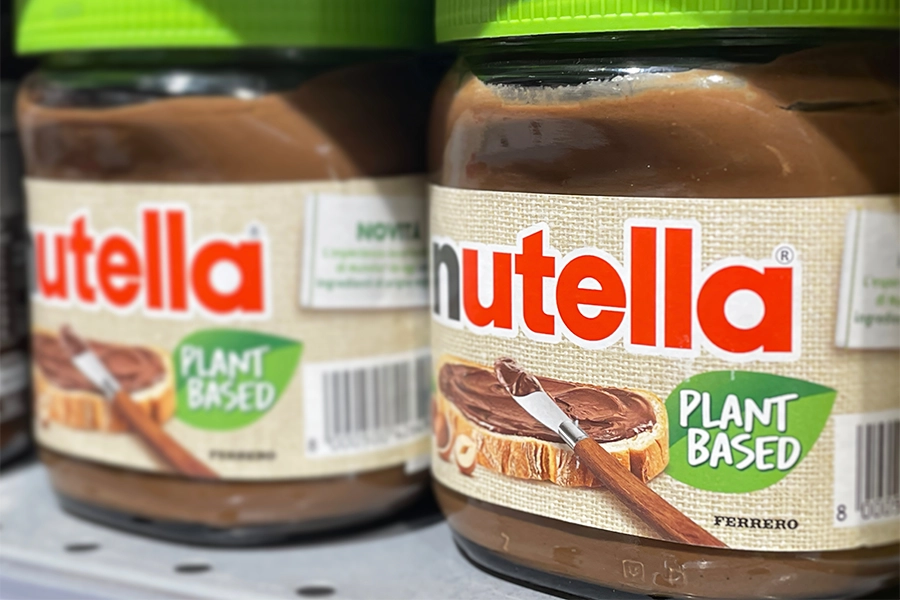 The rise of plant-based consumption trends continued, with new advances in protein sources and sustainability gaining traction.
June
Shifting consumer expectations toward healthier, sustainable, and creative food choices was the focus at PLMA in Amsterdam, Netherlands. Plant proteins, organic ingredients, and hybrid dairy took center stage on the show floor. We looked back at some of the highlights.
Deliveroo takes flight in Dublin with Manna drone partnership
Deliveroo partnered with drone delivery specialist Manna to pilot ultra-fast aerial deliveries in Dublin. The test service was part of Deliveroo’s strategy to enhance customer experience and extend reach in suburban locations. The trial was intended to assess the viability of drone deliveries in hard-to-reach areas.
Citrus under pressure: IFF VP on “turbocharging” innovation amid supply chain squeeze
Citrus price volatility has shaken the global food industry over the past three years, driven by challenges such as climate extremes, disease outbreaks, and trade complexities. We spoke to Karel Coosemans, VP of Citrus Innovation at IFF, about how these pressures are spurring innovation in the supply chain.
Researchers reveal new method to transform yogurt production and extend shelf life
A team of researchers developed a method to reduce bacterial cultures in dairy production by up to 80%, which could significantly cut costs and help prolong product shelf life. The findings could help shape new developments in yogurt manufacturing. We looked at the research and its implications for the dairy industry.
July
Labeling pain: Swiss government mandates transparency for animal suffering
The Swiss Federal Council introduced mandatory labeling for food from non-human animals subjected to painful procedures without anesthesia. We spoke with the Swiss Farmers’ Union and animal welfare advocates about the move and its implications for Switzerland’s food industry.
Unilever accused of greenwashing its food brands under scrutiny from Dutch authorities
The Dutch Consumers Association, Consumentenbond, accused Unilever of “large-scale greenwashing,” with its research showing that over half of the examined products carried misleading sustainability claims, along with the use of “self-invented” logos for added credibility.
AI continued revolutionizing the F&B industry, helping manufacturers and brands integrate smart tools and digital systems into their innovation pipelines. “AI-enhanced” became an emerging term used to champion the standout features of new solutions. We spoke with Kerry and Corbion about AI integration and the possibilities for enabling smarter, faster, and more sustainable F&B innovations.
Transparency triumphs at IFT First 2025: Ingredion, Comet Bio & FoodChain ID
Consumers were increasingly influenced by environmental and social factors when choosing food and beverage products. At the IFT First 2025 trade show in Chicago, US, supply chain transparency took center stage as exhibitors presented solutions for more responsible ingredient sourcing and holistic sustainability choices. AI became integral in driving faster innovation, helping manufacturers streamline R&D and adapt to changing market needs.
August
Vegan growth: ADM explores new opportunities with diverse protein solutions
Across plant-based product categories, health and nutrition remained primary consumption motivators, although animal welfare concerns still topped the list, according to ADM. Formulation advancements to support improved taste and texture were also critical drivers among plant-forward consumers. Jacquelyn Rodenkirch-Schuh, global senior director of product marketing, went into more detail.
Keurig Dr Pepper secures acquisition of JDE Peet’s in US$17.4B deal
Keurig Dr Pepper announced it would acquire JDE Peet’s in an all-cash deal valued at €15.7 billion (US$17.4 billion). The agreement set the stage for Keurig Dr Pepper to later split into two publicly traded companies, creating a dedicated global coffee business and a separate North American beverages company.
Registrar Corp expert: How MAHA food regulation policies are reshaping the US food industry
The “Make America Healthy Again” (MAHA) movement shook up the US food industry with bans on synthetic dyes, tighter ingredient rules, and sweeping changes to GRAS determinations. With big brands pledging reform, we spoke with Registrar Corp’s Anna Benevente about ongoing legislative changes and their implications for the industry.
Dubai’s GigaFarm project: Scottish businesses prepare to build world’s biggest vertical farm
Scotland-based agri-tech manufacturer Intelligent Growth Solutions was set to begin building the world’s largest vertical farm, the GigaFarm, in Dubai. We spoke with the firm’s CEO, Andrew Lloyd, about the project’s circular model and its potential to be replicated in urban areas worldwide.
September
FrieslandCampina Ingredients unveils Singapore hub to accelerate functional food innovation in APAC
FrieslandCampina Ingredients launched a new application center in Singapore to boost the supply of its ingredient solutions in evolving Asia-Pacific markets, including Japan, Korea, Australia, New Zealand, and Southeast Asia.
Mars invests big in EU operations as regulators resume Kellanova acquisition probe
Mars announced plans to invest €1 billion (US$1.18 billion) into its EU operations by the end of 2026 as it sought EU approval for its US$36 billion acquisition of Pringles maker Kellanova. EU antitrust regulators investigated the deal amid concerns that it could give the American multinational too much negotiating power with retailers and lead to price hikes for consumers.
Global trade agreement targets harmful fishing subsidies
A new multilateral agreement under the World Trade Organization, aimed at phasing out harmful fisheries subsidies and enhancing the sustainability of marine resources, entered into force. The UN FAO welcomed the agreement, saying it aligns with its measures to tackle illegal, unregulated, and unreported fishing.
Food Matters Live Rotterdam: AI, sensory, and personalization take center stage
Food Matters Live brought its first edition to Rotterdam, Netherlands, at the Ahoy Convention Centre, following the success of its UK and Irish events over the past decade. The interactive event addressed the future of sustainable food nutrition through the lens of hands-on product development. F&B companies faced pressures from climate change, geo-political tensions, and trade tariffs, compelling them to adopt risk management strategies.
October
EU lawmakers vote to ban “meaty” names for plant-based food
The European Parliament voted to restrict the use of words like “sausage,” “steak,” and “burger” on the labels of plant-based food. MEPs adopted the proposal, with 355 votes for, 247 against, and 30 abstentions. The vote closely followed WePlanet and the European Vegetarian Union setting up the “No Confusion Coalition,” which represents more than 400 organizations, NGOs, and food companies across Europe.
Healthy school lunches: California’s ultra-processed food ban sets new standard
California introduced a pioneering law to eliminate UPFs from public school meals — the first US state to enact such measures. Assembly Bill 1264, signed by Governor Gavin Newsom, requires schools to begin phasing out UPFs by July 2029, with a complete ban by July 2035. The bill, which also requires vendors supplying UPFs to schools to comply by 2032, received overwhelming bipartisan support.
Artificial food colors: How brands can triumph from changing US regulations
New research by Innova Market Insights suggested that breakthroughs in plant-based colorants would inspire the shift toward natural colors and clean label alternatives in the US F&B market, as regulators and consumers rapidly turn against artificial colors. US consumers increasingly avoid artificial food colorings, but petroleum‑based, synthetic food dyes are still present in almost half of new F&B beverage product launches in the country.
Innova Market Insights announces F&B trends for 2026: Gut health, protein & stress relief
Gut health, protein intake, and mental health support emerged as key F&B industry drivers. Food Ingredients First spotlighted Innova Market Insights’ top ten industry trends for 2026, as plant-based foods and functional beverages also gained traction.
Inside the K-food craze: How Korean brands plan to expand internationally
The K-food craze went global. From kimchi to gochujang, Korean flavors found fans far beyond their homeland. We spoke with South Korean F&B giants Daesang and Samyang, and France-based Sias, a leader in Korean food tech. These company experts revealed what’s fueling the K-wave — and how Korean ingredients can move from trend to staples.
November
How to define ultra-processed foods? IFT experts renew calls for science-based classification
Pressure is mounting on food regulators to devise an official definition of ultra-processed foods (UPFs). As many call for the worst excesses of industrial food production to be reined in, one of the hot-button topics is how to define UPFs. It was back in the spotlight as the Institute of Food Technologists (IFT) sought a uniform national standard on UPF.
What’s trending in protein? How brands can prosper from fast-evolving F&B market
Global demand for high-protein foods is booming, but brands must go beyond simple “protein-packed” claims to stand out. Innova Market Insights found weight management is the third leading reason consumers seek more protein, yet only 5% of new launches pair protein with this benefit — a missed opportunity, said global insights director Lu Ann Williams.
PepsiCo closes multiple Frito-Lay plants across US amid snack market pressures
PepsiCo revealed plans to close several Frito-Lay manufacturing plants across the US in 2025, citing weakening consumer demand and rising operational costs. The closures, impacting facilities that have been in operation for decades, reflect a significant restructuring of the company’s North American snacks business. We looked closer at the company’s plans.
The GLP-1 movement: How weight management medication is reshaping F&B
As GLP-1 medications gain momentum to support weight management, the food and beverage industry is heavily influenced by the rise of this crucial behavioral and nutritional shift. Food Ingredients First examined how GLP-1 medications are reshaping nutrition-forward F&B as industry leaders respond to this emerging trend.
Gut health goes mainstream: The new growth engine for functional F&B
Gut health has gone mainstream, with consumers increasingly viewing microbiome support as the gateway to holistic wellness. New data from Innova Market Insights showed a surge in global F&B launches making gut or digestive health claims amid rapid innovation in functional, clean label products. We explored this leading industry trend. Consumer demand for transparency led to a surge in clean label reformulations, with companies increasingly moving away from synthetic additives.
December
Fi Europe 2025 Innovation Awards: Winners span plant-based fats to cocoa traceability
Fi Europe announced winners across six Innovation Awards categories at its 30th edition ceremony in Paris, France. Food Ingredients First spoke with the winners, including Time Travelling Milkman, Tetra Pak, AKA Food, ICL Food Specialties, and ofi, about their breakthrough innovations selected from a record 177 submissions.
EU agrees deforestation regulation delay as review clause leaves industry in compliance limbo
The European Council and Parliament reached a provisional agreement on a one-year postponement of the EU Deforestation Regulation, but a mandated simplification review before the new deadline created fresh uncertainty for F&B supply chains already navigating the balance between compliance costs and competitive advantage.
Fi Europe 2025: Vegan ingredients replace functional additives for cleaner labels
As the debate over ultra-processed foods intensified, suppliers found new functionalities in plant-based ingredients. We spoke with Fuji Brandenburg, Roquette, Biorigin, and Angel Yeast at Fi Europe 2025 on how brands can leverage these new ingredients to build cleaner labels without conventional additives.
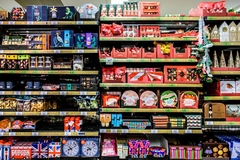
Supermarket food trends: What’s driving consumer purchasing decisions?
The growing use of GLP-1 and push for more protein and fiber, as well as rising concerns over ultra-processed foods, reshaped the grocery shopping landscape. Food Ingredients First took a closer look at the year’s supermarket analysis from high-end UK grocer Waitrose and US giants Whole Foods, Kroger, and Walmart.
After the spike: Cocoa’s volatile new norm forces structural industry shift
Barry Callebaut was reportedly exploring separating its cocoa division from its chocolate business, marking what would be a structural break in the industry between manufacturing and commodity trading. Major brands continued reformulating products to reduce cocoa content despite price relief, suggesting supply volatility is being treated as a forecast rather than an anomaly.