




Tyson Foods’ beef losses surge twelvefold as US cattle herd hits 74-year low

Key takeaways
- Tyson Foods reports Q1 fiscal 2026 sales of US$14.3 billion, up 5.1%, with prepared foods sales climbing 8% and chicken posting its fifth consecutive quarter of volume gains.
- The beef division’s losses ballooned to US$319 million as the US cattle herd numbers hit a 74-year low, prompting Tyson to close its Lexington, Nebraska, plant and the Trump administration to open tariff-free Argentine beef imports.
- Tyson maintained its full-year adjusted operating profit outlook of US$2.1 to US$2.3 billion, with sales expected to grow 2–4% in fiscal 2026.
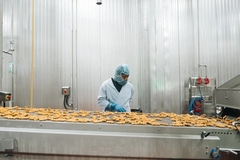
Tyson Foods has reported first-quarter fiscal 2026 sales of US$14.3 billion — a 5.1% increase on the same period last year — with growth in its chicken and prepared foods divisions masking a sharp deterioration in its beef business. The US meat giant’s chicken arm posted its fifth consecutive quarter of rising volumes, while prepared foods brands, including Jimmy Dean and Hillshire Farm, delivered their strongest quarterly performance in over a year.
However, Tyson’s beef division swung to a US$319 million operating loss — more than 12 times the US$26 million loss recorded a year earlier — as the US cattle herd shrank to levels not seen since the 1950s.
Prepared foods and chicken ride protein wave
Prepared Foods was the clear standout, with sales climbing 8% to US$2.67 billion and operating profit up to US$322 million. Chicken sales rose 3.4% to US$4.21 billion, though profits dipped slightly.
The gains reflect surging consumer appetite for protein-rich, convenient formats — a trend Innova Market Insights has identified as the dominant force in food and beverage for 2026. The market research firm’s annual trends forecast ranks “Powerhouse Protein” as its number one trend, noting that nearly 60% of global consumers are actively seeking to increase their protein intake.
“Our first quarter results reflect solid execution across our portfolio,” says Donnie King, president and chief executive of Tyson Foods. “Prepared Foods delivered top and bottom-line growth while Chicken reported its fifth consecutive quarter of year-over-year volume gains.”
King says the company is “well-positioned to capture this momentum” as protein demand continues to rise.
Innova data also shows that 42% of consumers globally now rank protein as their most important ingredient when shopping, with demand cutting across age groups and income levels.
For Tyson, that translates directly into volume growth for its branded chicken and convenience products. The company also launched Tyson Simple Ingredient Nuggets during the quarter, aligning with Innova’s finding that 40% of consumers prioritize “natural or minimally processed” credentials when choosing protein products.
Beef crisis deepens
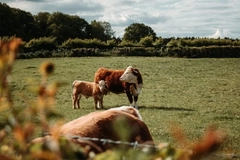
The results in the beef segment are starkly different. While beef sales rose 8% to US$5.77 billion on higher cattle prices, the division lost US$319 million in the quarter as the cost of buying cattle far outstripped what Tyson could recover at retail. The US cattle herd fell to 86.2 million head in January 2026, according to the USDA — the lowest figure since 1951 — after years of drought forced ranchers to sell off breeding stock rather than rebuild.
Tyson closed its Lexington, Nebraska, US, beef plant in January, removing around 5,000 head of daily processing capacity from the market. The closure cost 3,200 jobs but was part of a deliberate effort to scale back beef operations to match the dwindling supply of cattle. Ground beef prices hit US$6.69 per pound in December 2025, the highest since records began.
The Trump administration responded last week by temporarily expanding the low-tariff quota for Argentine lean beef trimmings by 80,000 metric tons to boost the domestic ground beef supply.
Pork, meanwhile, was broadly flat. Sales held steady at US$1.6 billion, though operating profit fell to US$50 million from US$73 million a year earlier.
Policy tailwinds for protein
The protein-heavy results land against a shifting US policy backdrop. The Trump administration’s 2025–2030 Dietary Guidelines for Americans, released in January, nearly doubled the recommended daily protein intake to 1.2–1.6 grams per kilogram of body weight, placing protein, dairy, and healthy fats at the top of a reimagined food pyramid.
The meat industry welcomed the move, though public health groups, including the Center for Science in the Public Interest, raised concerns over the scientific process behind the recommendations.
Tyson maintained its full-year outlook, forecasting company-wide adjusted operating profit of US$2.1 to US$2.3 billion and sales growth of 2–4% for fiscal 2026.