


ISM 2026 preview: Redefining confectionery colors with GNT and California Natural Color
Key takeaways
- GNT and California Natural Color are pioneering plant-based, vibrant, and functional color solutions, aligning with consumer trends for health, sustainability, and clean labels.
- The focus is on creating colors that not only enhance a product’s visual appeal but also reflect the flavor and functional benefits.
- As the confectionery market evolves, color innovation will increasingly focus on sophisticated, nuanced shades, sustainability, and process flexibility.

Natural and plant-based color innovations are evolving to meet consumer and technical demands in modern confectionery, aligning vibrant, authentic colors with flavor expectations, sustainability concerns, and the growing clean label and wellness trends.
While there’s growing demand for vibrant, natural, functional colors that reflect authenticity, sustainability, and health, the confectionery industry faces challenges in achieving consistent, high-performance results across different product types and maintaining cost-effectiveness.
Ahead of the ISM 2026 sweets and snacks trade show in Cologne, Germany (Feb 1–4), we caught up with F&B color innovators GNT Group and California Natural Color to understand how they help brands create multisensory experiences that appeal to the eyes but also satisfy taste and wellness expectations.
Colors as emotional indicators
Color plays a huge role in storytelling and drives F&B purchasing decisions, explains Dieuwertje Raaijmakers, marketing communications specialist at GNT.
“Color generally provides a clear visual link to the flavor, with the intensity of the hue often mirroring the intensity of the flavor. The color also provides an indication of the general product identity and helps set the tone for the whole experience — bright shades might be used to show sweetness and build a sense of fun and novelty, for example.”
GNT will present functional fruit gum concepts at ISM, inspired by the vibrant cuisines and wellness traditions of Southeast Asia, from Vietnam to Thailand to Indonesia.
“They feature flavors including pink pomelo, dragon fruit, and mandarin, and the colors we’ve used are drawn from the region too, with bold, energetic, and saturated tones that express sweetness, freshness, and tropical vibrancy. The colors reflect the joy of culinary exploration and the cultural significance of food as nourishment for body and mind,” says Raaijmakers.
“It’s important for the color, flavor, and functional benefits to work together to send the right message. For example, our ‘relax’ gummy concept at ISM features ashwagandha and a plum flavor — its deep purple shade reflects the richness of ripe fruit, which is a symbol of abundance, depth, and inner strength. That also ties in with the functional benefits, with the ashwagandha supporting stress relief and mental resilience.”
GNT’s “concentrate” concept, on the other hand, contains vitamin B with a pineapple flavor. Its sunny yellow color is intended to reflect “freshness and positivity,” while the vitamin B helps support concentration, mental freshness, and stress reduction.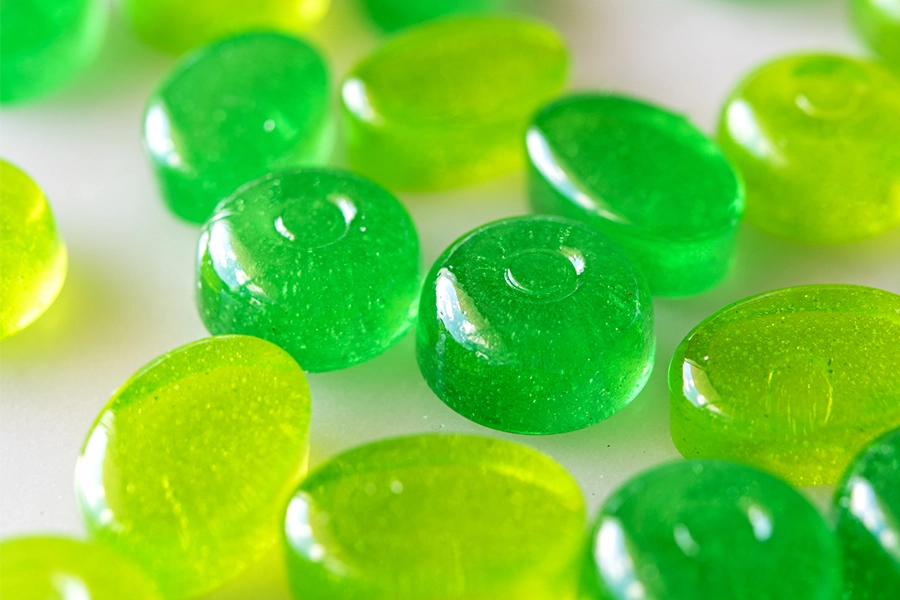 GNT’s Exberry “Sensory Escape” for a “dreamlike palette” in sweets and confectionery.
Natural colors and clean label demands
As clean label expectations continue to rise, natural color innovation has shifted toward solutions that deliver brightness without compromising ingredient transparency or flavor integrity, explains Dana Osborn, marketing manager at California Natural Color.
“Today’s solutions are increasingly fruit- and vegetable-specific, allowing formulators to achieve vibrant, cleaner shades that align more closely with familiar flavor cues. This enables formulators to create visually appealing confections where color reinforces flavor expectation and label claims, supporting consumer trust while meeting performance demands of modern confectionery processing.”
In applications like gummies and hard candy, processing conditions play a major role in natural color performance. Heat exposure and cook time can impact color stability, particularly for heat-sensitive pigments. Other key factors include pH, water activity, and the base matrix — for example, gelatin versus pectin systems in gummies. Shelf life expectations and light exposure also need to be considered early in development.
“Since these products are often flavor-forward, color dosage must be carefully balanced so it delivers the desired visual impact without distorting flavor perception — this is why application-specific color systems, rather than one-size-fits-all solutions, are increasingly important,” says Osborn.
Brands are increasingly aligning fruit-derived colors with corresponding fruit flavors as part of a broader clean label and transparency strategy.
“Shoppers expect visual cues to match ingredient labels, and inconsistencies between color and flavor can quickly undermine consumer trust. Beyond label clarity, this alignment also supports a more cohesive sensory experience, where color, flavor, and messaging reinforce one another,” continues Osborn.
“As a result, formulation decisions around color are now closely tied to branding, ingredient sourcing, and regulatory considerations, rather than being a purely aesthetic choice.” ISM, the “world’s largest sweets fair,” opens its doors on February 1 at the Köln Messe, Germany.
What’s next in color innovation?
GNT’s “Gather Together” report examines how consumers are using food and drink to come together and experience moments of joy and connection at a time of global instability.
“We’ve identified four different ‘trend directions’ — for example, the ‘Sensory Escape’ trend is about how multisensory food experiences are providing escapism and wonder as a remedy to routine lifestyles,” says Raaijmakers.
“‘Sensory Escape’ products tend to feature a dreamlike palette, including mysterious and eerie purples and translucent blue and green hues that tap into a sense of the unconventional and mysterious.”
“Ultimately, we expect to see various palettes emerging across confectionery as the more creative brands use new visual strategies to build connections with consumers — it’s all about finding the right color scheme to showcase each product’s specific appeal.”
As flavor trends continue to expand into more complex, globally inspired profiles, California Natural Color expects natural color innovation to remain a key factor in helping those flavors translate visually.
“We’re seeing growing interest in layered, nuanced shades that reflect sophisticated flavor combinations,” says Osborn.
“Innovation is also focused on improving format flexibility and process tolerance, enabling natural colors to perform across a wider range of confectionery applications and manufacturing conditions.”
“At the same time, sustainability, traceability, and supply chain resilience are becoming integral to how new solutions are developed.”
Raaijmakers also expects sustainability to remain an important issue for modern consumers, but notes there are growing concerns about greenwashing. Therefore, a product’s environmental footprint information is important because it provides a measurable, trustworthy metric.
“Brands might look to use color to support that sustainability messaging with shades that evoke certain ingredients. For example, medicinal fruit leathers, gummies, and jelly sweets flavored and colored with deep-red seasonal fruit alternatives, like rowan berries that are high in nutrients such as vitamin C.”
Food Ingredients First recently explored how social media drives vibrant colors in food and beverage applications, as regulations accelerate the shift from synthetics to natural alternatives.